Breaking the Lineage of Overfunctioning Women: How Intergenerational Trauma Shapes High-Achievers
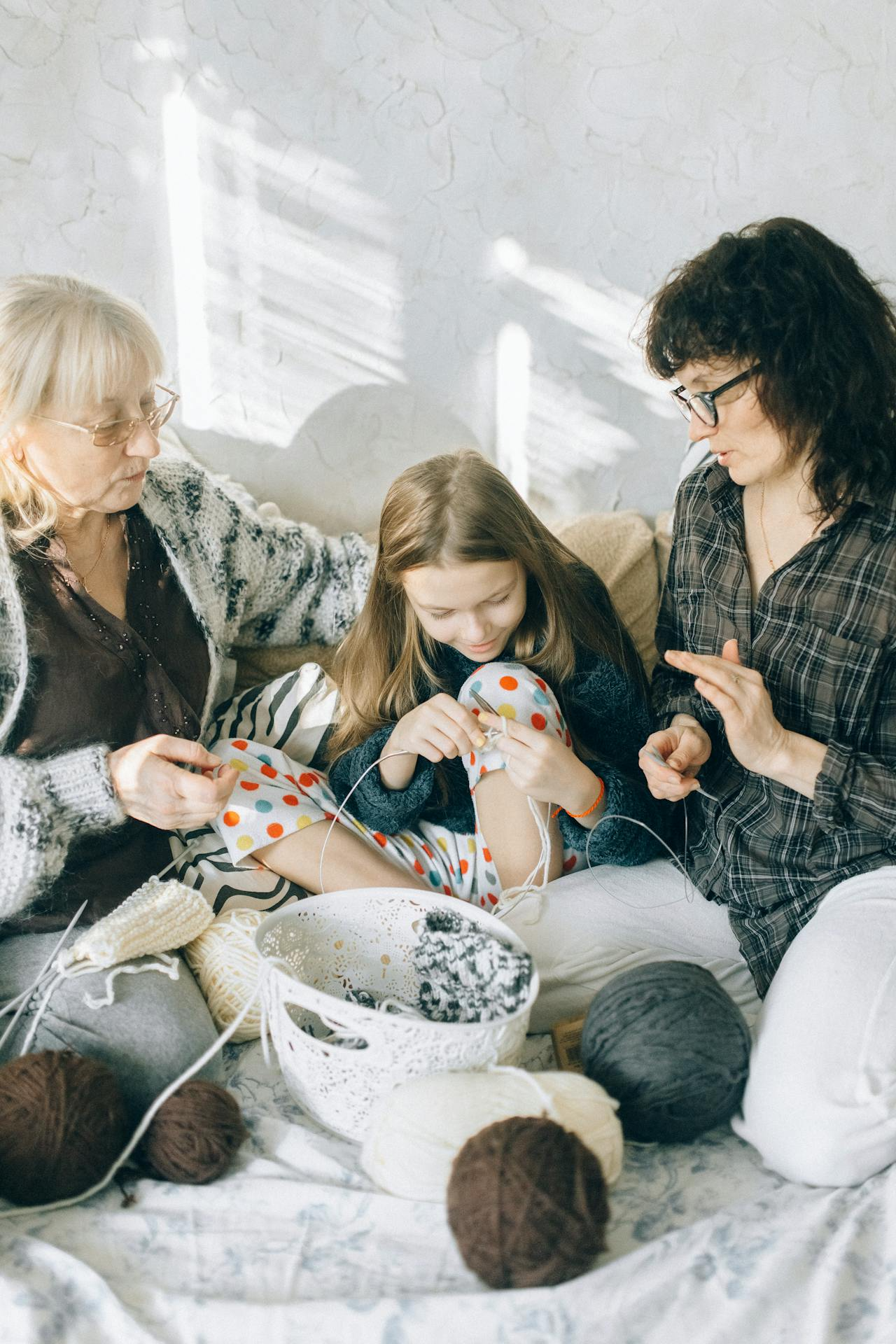
The lineage of overfunctioning women is intergenerational trauma.
So many high-achieving women move through life carrying an invisible inheritance — a pattern of doing, striving, fixing, proving, and caretaking that feels instinctual. It shows up as being the responsible one, the dependable one, the one who can handle anything. It becomes a lifestyle of anticipating needs, managing crises, never letting the ball drop, and making sure everyone else is okay.
From the outside, it looks like competence or ambition. Inside, it often feels like pressure, burnout, and the belief that you must earn your worth through your usefulness.
This pattern is not a personal flaw.
It’s not something you “chose.”
It’s something your nervous system learned.
Because the lineage of overfunctioning women didn’t begin with you — it began with the generations before you who survived by staying busy, staying silent, staying useful, and staying small.
What Is Overfunctioning?
Overfunctioning is when you consistently do more than your share (physically, mentally, emotionally, or relationally) often to the point of exhaustion. It’s when your default mode becomes:
anticipating everyone’s needs
taking charge without being asked
minimizing your own pain
apologizing for resting
finding it easier to do everything yourself than ask for help
believing the world stays standing because you hold it up
Overfunctioning is a survival response.
Your body learned that staying busy keeps you safe.
Your mind learned that doing more makes you valuable.
Your nervous system learned that slowing down is dangerous.
These are lessons passed down, often silently, through the women who came before you.
The Intergenerational Roots of Overfunctioning:
Intergenerational trauma isn’t only about tragedies or chaos. It’s also about the coping strategies families develop in response to chronic stress, oppression, or unsafe environments. These strategies then become normalized, taught, and absorbed by future generations.
For many women, especially women from marginalized or under-resourced communities, survival required overfunctioning.
Your mother may have learned to stay busy to stay safe.
Maybe she grew up in a home where chaos simmered beneath the surface, and being productive kept her out of the way. Maybe she stayed busy to avoid conflict, or because asking for help was met with rejection. Maybe she kept herself constantly occupied because rest felt unsafe.
Your grandmother may have been taught that rest = laziness.
Generations of women were told their worth came from self-sacrifice. Rest wasn’t an option — it was a threat to survival. Many lived through cultural norms that demanded resilience without relief.
Generations before them survived by being useful, quiet, and self-effacing.
Women were taught to be “good” by being accommodating, emotionally available, and endlessly giving. Their bodies learned that their needs were secondary, sometimes even dangerous.
These patterns don’t disappear when a generation “does better.”
They linger in the nervous system.
They live in the micro-moments of how you move through the day.
This is how the lineage of overfunctioning women is created, through repeated modeling, reinforced beliefs, and nervous systems shaped by the environments they navigated
How the Nervous System Learns Overfunctioning:
The fascinating (and frustrating) truth is that most overfunctioning happens automatically. It’s not a conscious decision. It’s a conditioned response.
You watched women ignore their needs. So your body learned that needs are a burden.
You watched women work through pain. So your body learned to push through signals of exhaustion.
You watched women carry the emotional load. So your body learned that you must manage the feelings of everyone around you.
You watched women never ask for help. So your body learned that asking is unsafe or shameful.
You watched women apologize for resting. So your body learned that rest must be justified or hidden.
Why Women Are Especially Vulnerable to Overfunctioning:

Research shows that women disproportionately take on:
emotional labor
domestic responsibilities
caregiving roles
conflict soothing
productivity pressures
perfectionism and self-surveillance
Sociologists call this the “third shift,” when after the workday and the home responsibilities, women also carry the mental load of keeping everything running.
Add cultural pressures, gender conditioning, and generational modeling, and you have the perfect recipe for chronic overfunctioning.
For high-achieving women in particular, the message becomes clear:
You are only as good as what you can do.
You are only lovable when you are useful.
You are only safe when you are exceptional.
The Cost of Overfunctioning on the Body and Mind:
When you’re raised inside the lineage of overfunctioning women, your body becomes wired for nonstop performance. Over time, this shapes your physiology.
Chronic stress becomes normalized. Your baseline becomes hypervigilant and you’re always scanning, anticipating, managing.
Rest feels unfamiliar or even threatening. Your nervous system interprets stillness as danger because historically, slowing down wasn’t safe.
You may experience burnout disguised as high productivity. You appear successful, but feel exhausted, resentful, or numb inside.
You disconnect from your needs. You struggle to identify hunger, fatigue, emotional overwhelm, or desire.
You may experience physical symptoms, such as headaches, muscle tension, sleep disturbances, digestive issues, anxiety or irritability, hormonal imbalances, weakened immune system.
The body remembers — it carries the lessons, the tension, the patterns of generations past.
The body can also learn a new way. With awareness, care, and small, intentional shifts, you can begin to rewrite the patterns your nervous system inherited.
You Can Interrupt These Patterns With Small Questions:
“What would it feel like to do a little less?” Maybe that means letting the dishes wait. Letting your body sink into the couch. Letting yourself breathe before solving the next problem.
“What if I didn’t have to hold everything?” Maybe you delegate one task. Maybe you let someone support you, even if it feels uncomfortable. Maybe you stop apologizing for your needs.
“What if rest was safe?” Rest is not laziness. Rest is repair. Rest is reclaiming your nervous system from generations of hypervigilance.
What Healing Actually Looks Like:
Healing the lineage of overfunctioning women looks like:
taking deep breaths before reacting
naming your needs
letting your body soften
practicing receiving help
resting without apology
slowing down enough to feel what's happening inside you
allowing yourself to be held instead of always holding everyone else
Healing looks like choosing presence instead of perfection.
Connection instead of control.
Compassion instead of self-criticism.
And each time you choose differently, the patterns shifts.
Your Lineage Gets to Include Peace:
You didn’t choose overfunctioning. Your nervous system learned it through generations of women who were doing the best they could with the resources they had.
But now you have new resources.
You have language for trauma. You have access to therapy and nervous system healing. You have community, awareness, and tools. You have permission to rest, soften, and let go.
The lineage of overfunctioning women may be part of your story, but it doesn’t have to be the whole story. The pattern may have begun generations ago… but it truly can end with you.

If you’re ready to start interrupting these patterns in your body and reclaiming rest, I invite you to download my free 15 Minute Body Reset.
This short, guided video walks you through three gentle somatic practices designed to help you calm your nervous system, release tension, and begin the process of unlearning overfunctioning.